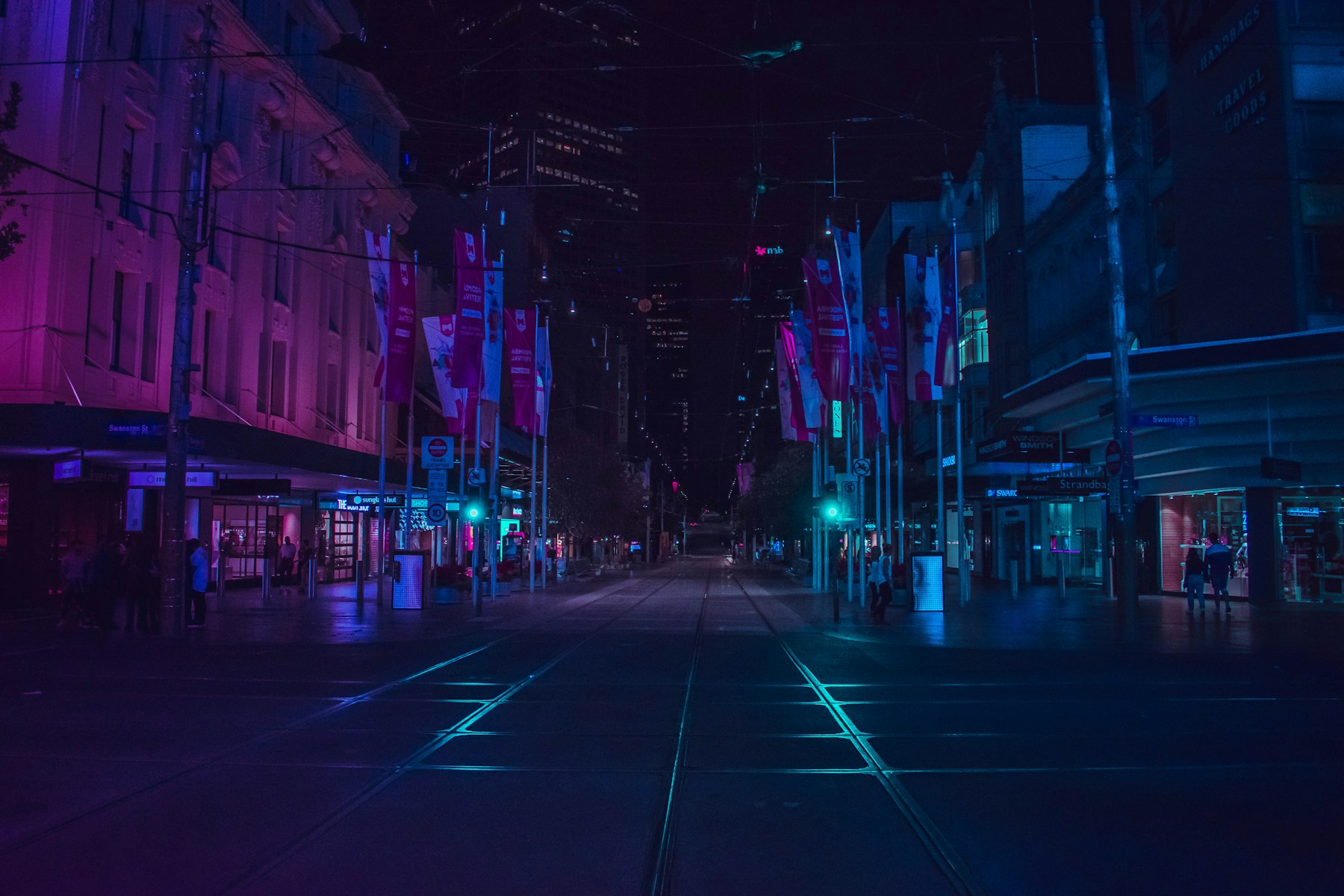
Every light you see at night is wearing a small atmosphere. How large that atmosphere looks depends on three things: the size of your pupil, the smoothness of your cornea, and how honestly your brain has learned to ignore what it can't fix. Patients ask about halos more than any other symptom, so here is the whole physics, across the desk.
Your pupil is the aperture
In daylight your pupil is a 2–3 mm hole and uses only the optical centre of your cornea — the well-behaved part. At night it dilates to 5–7 mm and starts sampling the periphery, where every eye (operated or not) is optically messier. Light passing through those outer zones lands slightly out of place, and a point becomes a glow. Photographers know this as shooting wide open; your f/1.2 lens is soft at the edges too.
Why month one is the worst
After LASIK the cornea is briefly swollen — microscopically, evenly, but enough to scatter. Swelling settles over weeks; the treated zone's edges smooth; and your brain, which is the best image-processing software ever shipped, quietly learns the new optics and subtracts the residue. By month six, in our series, 1.2% of patients still notice halos they'd call intrusive; most of those had large pupils we flagged — and discussed — before surgery.
We measure your night-time pupil at the scan. If it's large and your correction is high, we will tell you your halo odds before you ever see the laser. Some patients choose ICL instead; a few choose their glasses. Both are correct answers.
The part nobody advertises
People with −4.00 glasses already see halos — through rain-flecked lenses, off-axis, doubled by reflections. Surgery usually trades one set of night artefacts for a smaller set. On this site's homepage there's a slider that renders a −4.50 street scene, halos included; drag it and watch what corrects and notice that the streetlights still bloom a little at 20/20. That's not a defect. That's air, and rain, and physics keeping its dignity.
— M.V., between patients, laser suite two